
When Ann Johnson suffered a devastating stroke, she lost the ability to speak. For years, the thoughts in her mind remained trapped behind words she could no longer say.
Then something remarkable happened.
Researchers implanted a brain-computer interface that interpreted her brain signals and converted them into text—and eventually into a digital voice modeled after her own. For the first time in years, Ann could communicate more naturally with her family and caregivers.
It wasn’t magic.
It wasn’t science fiction.
It was artificial intelligence working alongside skilled physicians, engineers, and therapists to restore something deeply human: the ability to communicate.
Stories like Ann’s capture both the promise and the questions surrounding AI in healthcare. Every week seems to bring headlines about AI diagnosing disease, assisting with surgery, discovering new medications, or helping doctors document patient visits. It’s exciting—but it can also feel overwhelming:
- Should you trust AI with your health?
- Will computers replace doctors?
- How much of your healthcare is already using AI?
The answer to the last question surprises many people—probably more than you realize.
AI is already part of modern healthcare
Artificial intelligence isn’t one single technology. Instead, it’s a collection of computer systems designed to recognize patterns, analyze large amounts of information, and assist people with complex tasks.
In healthcare, AI doesn’t replace medical knowledge. It helps healthcare professionals process information faster, identify patterns they might otherwise miss, and spend more time focusing on patients.
In fact, many people have already benefited from AI without even knowing it.
Radiologists use AI to help identify subtle abnormalities on medical images. Pathologists are beginning to use it to analyze tissue samples. Hospitals use AI to predict patient needs and improve scheduling. Physicians increasingly rely on AI-powered tools that summarize medical records or assist with documentation during office visits.
Most patients never see these technologies working behind the scenes. They simply experience faster answers, more efficient care, and, ideally, more time with their healthcare team.
How AI operates alongside physicians
One way to think about AI is to compare it to GPS navigation.
Most of us use GPS every day. It analyzes enormous amounts of traffic data, suggests efficient routes, and helps us avoid delays. But if your GPS directs you into a flooded road or around a newly closed bridge, you don’t blindly follow it. You use your own judgment.

Your doctor approaches AI in much the same way.
Artificial intelligence can rapidly analyze millions of data points and offer recommendations. But experienced physicians still evaluate those recommendations, consider your medical history, perform physical examinations, answer your questions, and make decisions based on the complete picture—not simply what a computer suggests.
AI is a powerful assistant.
It is not your physician.
Sometimes AI helps doctors see what people can’t
That distinction became especially meaningful for Mark Olding.
Mark had undergone imaging after experiencing persistent health concerns. During the review process, an AI-assisted system highlighted an area that deserved closer attention—something subtle enough that it could easily have been overlooked during an initial review.
Additional evaluation confirmed early-stage lung cancer. Because the cancer was identified early, Mark was able to receive treatment before it progressed.
His physicians—not the computer—made the diagnosis and developed his treatment plan. But AI helped bring a potentially life-saving finding to their attention sooner.
Stories like Mark’s illustrate one of AI’s greatest strengths.
Artificial intelligence excels at recognizing patterns across enormous amounts of information. It doesn’t become tired after reviewing hundreds of images, and it can compare subtle differences that may be difficult for the human eye to detect.
That doesn’t mean AI is always correct. Like any medical tool, it has limitations. Images can be misleading. Data can be incomplete. Human judgment remains essential.
The goal isn’t to replace clinical expertise. It’s to give skilled healthcare professionals another tool that helps them care for patients more effectively.
Ultimately, that’s where AI delivers its greatest value—not by replacing the human side of healthcare, but by supporting it.
AI can also improve everyday care
Not every AI success story involves a dramatic diagnosis. Sometimes, its greatest impact is making healthcare more accessible and easier to navigate.
For Yvonne Cook, that meant receiving care without leaving home.
Living with chronic health conditions made frequent office visits difficult, especially during periods when traveling wasn’t practical. Through a virtual care program supported by AI-enabled monitoring tools, her healthcare team could review her symptoms, track changes over time, and identify when she needed additional attention.
The technology didn’t replace her physician. It helped her physician stay connected.
This is one of the fastest-growing areas of healthcare today. AI-powered tools can help monitor chronic conditions, identify changes that warrant follow-up, and organize information from wearable devices or home monitoring equipment. They can also help physicians recognize trends that might otherwise take weeks or months to notice.
For patients, that can mean fewer unnecessary trips, earlier interventions, and more personalized care.
AI still can’t replace the human side of healthcare
With so much attention surrounding artificial intelligence, it’s reasonable to wonder whether doctors will someday become unnecessary.
The evidence suggests otherwise. Healthcare involves far more than analyzing data.
A physician listens when symptoms don’t fit neatly into a textbook. A nurse notices when a patient seems unusually anxious. A therapist recognizes emotions that no algorithm can fully understand. Families weigh values, priorities, and quality-of-life considerations that are deeply personal.
Artificial intelligence doesn’t comfort frightened parents. It doesn’t pray with a patient before surgery. It doesn’t celebrate good news or deliver difficult conversations with compassion.

Those moments require empathy, wisdom, and trust.
Those are uniquely human responsibilities.
Even the most advanced AI systems can occasionally produce inaccurate information, reflect biases in the data they were trained on, or struggle with unusual situations. That’s why healthcare organizations continue to emphasize that AI should support—not replace—clinical judgment.
The best healthcare combines the strengths of both. Technology provides speed, scale, and analytical power. People provide compassion, experience, and wisdom.
How you can use AI wisely
You don’t have to be a technology expert to benefit from artificial intelligence.
In fact, many people already use AI every day without thinking about it—from smartphone voice assistants to online maps and language translation tools.
Healthcare is no different.
Used thoughtfully, AI can help you become a more informed and engaged patient.
Here are a few practical ways you can use it wisely:
- Learn about a new diagnosis or medical code. AI can explain unfamiliar medical terms in plain language and help you prepare questions before your next appointment.
- Organize complex information. If you’ve received several pages of test results or educational materials, AI may help summarize them so you better understand the big picture.
- Prepare for conversations. AI can help you create a list of thoughtful questions to ask your physician or explain treatment options you want to discuss.
- Compare reliable information. Use AI as a starting point—not the final answer—and confirm important medical information with trusted sources and your healthcare team.
The most important rule is simple: Use AI to become a better-informed patient, not to replace your doctor.
Healthcare’s future will be both smarter—and more human
Artificial intelligence is advancing rapidly.
Researchers are developing tools that may detect disease earlier, personalize treatments, accelerate medical research, reduce administrative burdens, and expand access to care in underserved communities.
Many of these advances are already moving from research laboratories into everyday clinical practice.
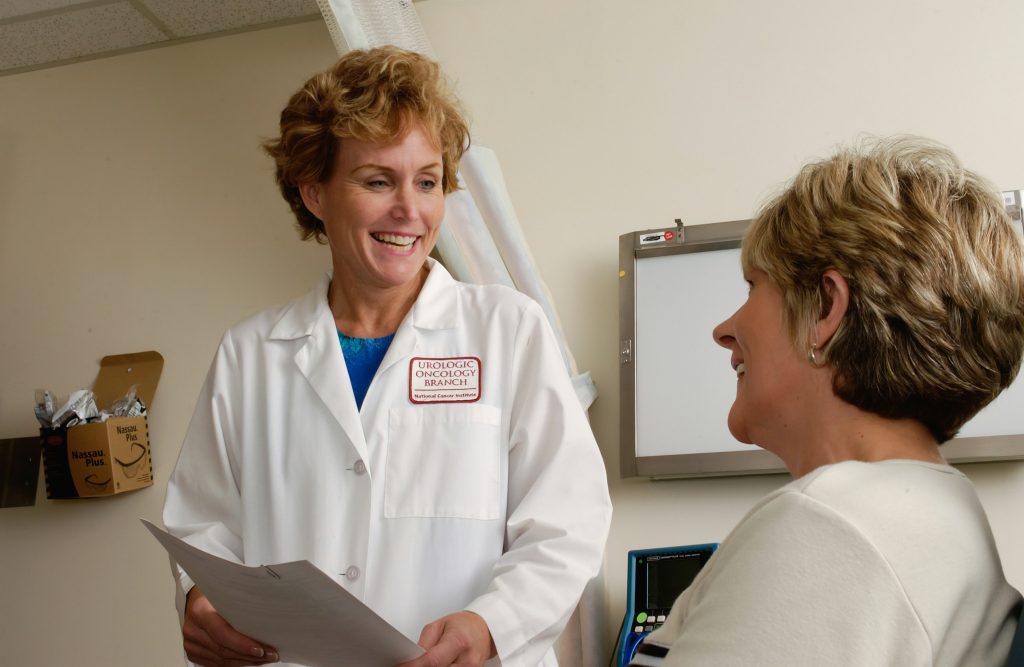
But amid all this innovation, one truth remains unchanged. Healthcare has always been, and always will be, about people.
The most meaningful advances are not those that simply make computers smarter. They’re the ones that help physicians spend more time with patients, help families make better-informed decisions, and help people receive the right care at the right time.
Technology is changing medicine.
Compassion doesn’t change.
The human side of healthcare
At Christian Healthcare Ministries, we’ve long believed that healthcare is about more than diagnoses, procedures, and medical bills.
CHM aims not to provide transactional — but transformational care. Our ministry is about people caring for people.
Artificial intelligence has tremendous potential to improve healthcare, and we believe many of its advances will benefit patients for years to come. When used responsibly, AI can help physicians make better-informed decisions, improve efficiency, and expand access to care.
But technology works best when it strengthens—not replaces—the relationship between patients and the healthcare professionals who care for them.
No algorithm can offer genuine compassion. No computer can understand your family’s hopes, fears, or values. And no technology can replace the trust that develops between a patient and a caring physician.
As AI becomes an increasingly important part of medicine, remember that one of your greatest advantages is staying informed, asking thoughtful questions, and partnering with healthcare professionals you trust.
The future of healthcare will almost certainly include artificial intelligence.
The human side of healthcare should always remain at its heart.
References
- AdvaMed. “New Exoskeleton Helps Paralyzed Patient Walk Again.” Accessed July 2026. https://www.advamed.org
- American Medical Association. Augmented Intelligence in Health Care. Accessed July 2026. https://www.ama-assn.org/practice-management/digital/augmented-intelligence-health-care
- Cincinnati Children’s. “Hospital-at-Home and Virtual Care.” Accessed July 2026. https://www.cincinnatichildrens.org
- Food and Drug Administration. Artificial Intelligence and Machine Learning (AI/ML)-Enabled Medical Devices. Accessed July 2026. https://www.fda.gov/medical-devices/software-medical-device-samd/artificial-intelligence-and-machine-learning-aiml-enabled-medical-devices
- National Academy of Medicine. Artificial Intelligence in Health Care: The Hope, the Hype, the Promise, the Peril. Accessed July 2026. https://nam.edu
- National Institutes of Health. Artificial Intelligence (AI). Accessed July 2026. https://www.nih.gov/artificial-intelligence
- Topol, Eric. Deep Medicine: How Artificial Intelligence Can Make Healthcare Human Again. Basic Books, 2019.
- University of California, Berkeley. “Brain-Computer Interface Restores Speech Through Personalized Digital Voice.” Accessed July 2026. https://news.berkeley.edu
- University of California, San Francisco. “Brain Implant Enables Woman With Paralysis to Speak Through Digital Avatar.” Accessed July 2026. https://www.ucsf.edu
- World Health Organization. Ethics and Governance of Artificial Intelligence for Health. Geneva: World Health Organization, 2021. https://www.who.int/publications/i/item/9789240029200
- WLWT. “AI Helps Detect Lung Cancer Earlier for Ohio Patient.” Aug. 1, 2025. https://www.wlwt.com

Want to know more about CHM?
Sign up to learn more about Christian Healthcare Ministries and receive our Info Pack right in your inbox.